
Reino: Animal; Filo: Cnidaria; Clase: Hydrozoa; Subclase: Hydroidolina; Orden: Anthothecata; Suborden: Capitata; Familia: Cladonematidae
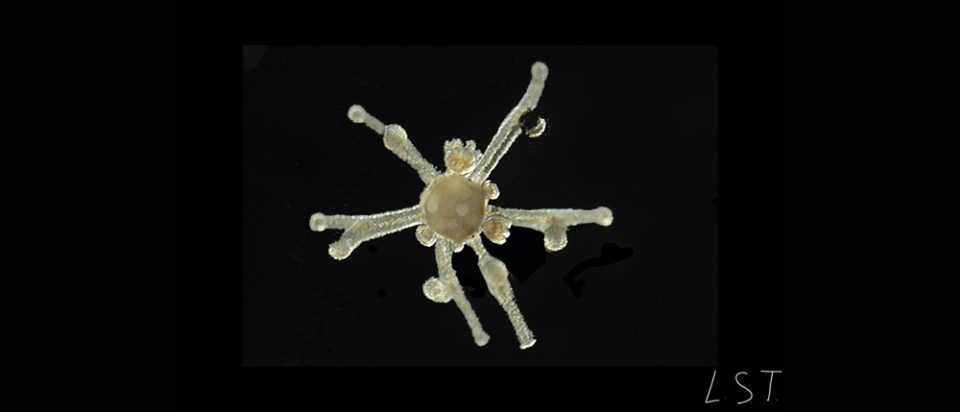
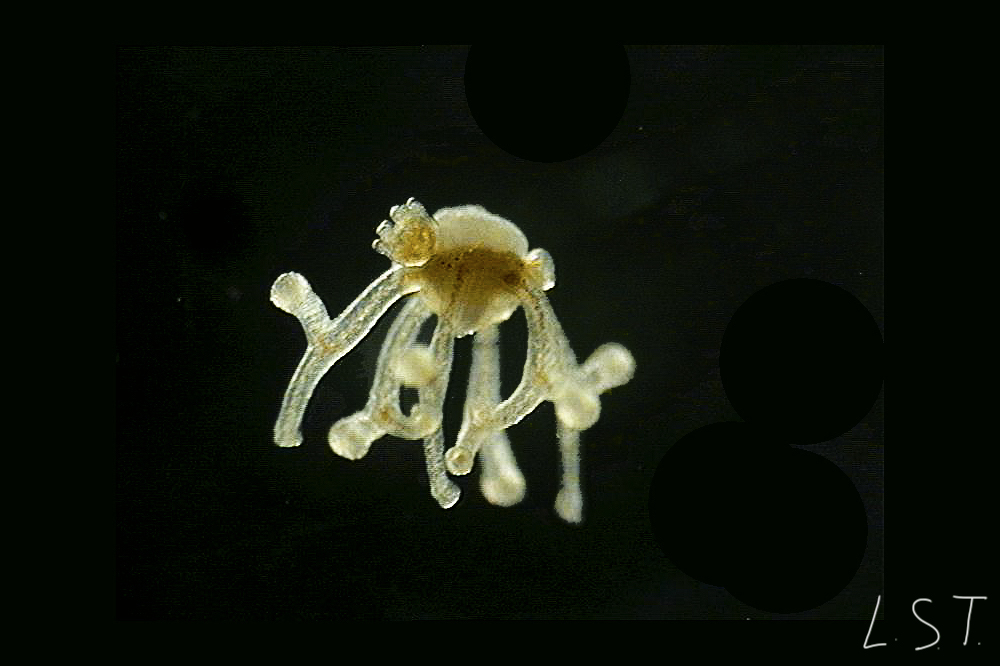
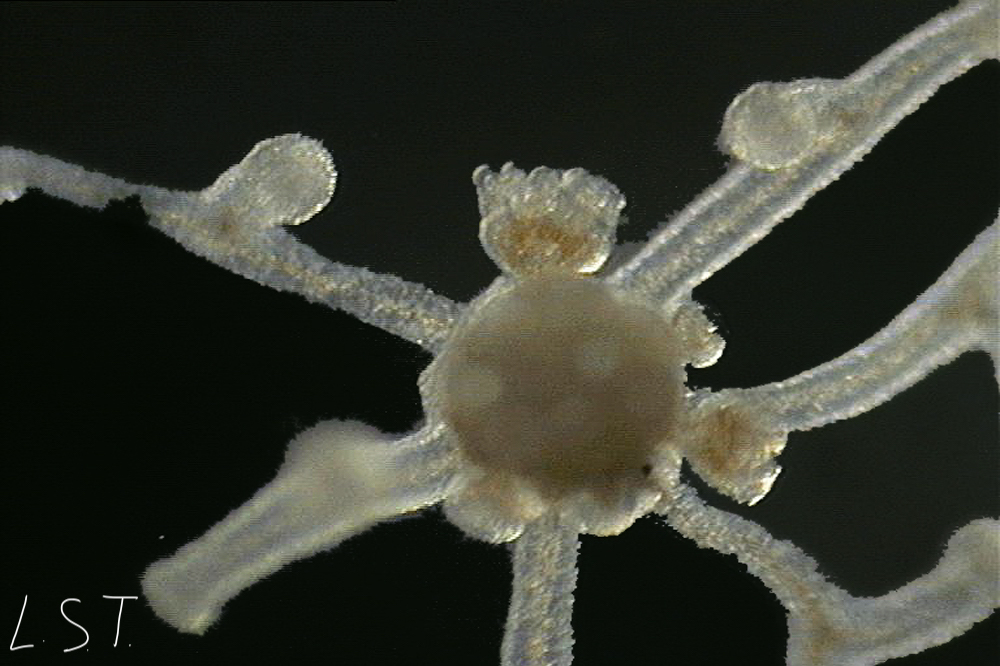
Eleutheria dichotoma Quatrefages, 1842
SINÓNIMOS: Clavatella prolifera Hincks, 1861; Eleutheria anisonema Haeckel, 1879; Eleutheria cnidobdella Haeckel, 1879; Eleutheria dichobdella Haeckel, 1879; Eleutheria dichocnida Haeckel, 1879; Eleutheria dichotoma anisonema Haeckel, 1879; Eleutheria dichotoma cnidobdella Haeckel, 1879; Eleutheria dichotoma dichobdella Haeckel, 1879; Eleutheria dichotoma dichocnida Haeckel, 1879; Eleutheria dichotoma heptanema Haeckel, 1879; Eleutheria dichotoma heteroclada Haeckel, 1879; Eleutheria dichotoma hexanema Haeckel, 1879; Eleutheria dichotoma octonema Haeckel, 1879; Eleutheria dichotoma pentanema Haeckel, 1879; Eleutheria dichotoma tetranema Haeckel, 1879; Eleutheria gemmipara Du Plessis, 1909; Eleutheria heptanema Haeckel, 1879; Eleutheria heteroclada Haeckel, 1879; Eleutheria hexanema Haeckel, 1879; Eleutheria krohni Krumbach, 1907; Eleutheria octonema Haeckel, 1879; Eleutheria pentanema Haeckel, 1879; Eleutheria prolifera (Hincks, 1861); Eleutheria tetranema Haeckel, 1879; Herpusa ulvae O. Schmidt, 1869
Fase medusa pequeña, hasta unos 0, 8 mm. y bentónica, con hasta 11 tentáculos que se bifurcan en su extremo, de ahí le viene el nombre dichotoma. La rama inferior de cada tentáculo posee un órgano de fijación. En el borde de la umbrella suele presentar yemas de medusas. Pólipos con más de cuatro tentáculos terminados en un botón. Vive sobre algas a poca profundidad.
DISTRIBUCIÓN
- Atlántico: Norte Y Sur
- Mediterráneo: Occidental y Oriental
- Mar Negro
MÁS INFORMACIÓN
FOTOGRAFÍAS
 |
 |
BIBLIOGRAFÍA
General
- Hofrichter, R. 2005. El Mar Mediterráneo. Fauna, Flora y Ecología. Guía Sistemática y de Identificación. Ed. Omega. 849 pp.
- Schuchert, P. (2020). World Hydrozoa Database. Eleutheria dichotoma Quatrefages, 1842. Accessed through: World Register of Marine Species at: http://www.marinespecies.org/aphia.php?p=taxdetails&id=117531 on 2020-03-25
PÁGINAS WEB
LUIS SÁNCHEZ TOCINO